Friday, 20 February 2015

Scare Tactics : Why Don Draper Had It Right


Scare Tactics 

 ‘Fear’ as a Successful Communications Tool

fear communications
The value of emotion in selling products, and papers, is more or less indubitable.
Christmas: every advert pulls on the heartstrings. Headlines about fairness and altruism pepper the pages of our newspapers.
February: roses are red, violets are blue and romance is in the air for every marketing campaign and headline that can possible squeeze in an iota of an excuse for doing so.
Yet this is not just a gimmick of once-a-year holidays. It is a strategic part of brand narratives from McDonalds to Nike, Virgin to Jack Wills.
And one of the most effective emotions is fear.
Take as an example the full-sized polar bear released in London this past January. It disrupted tube-commuters’ usual routine of ‘studiously minding own business and ensuring zero eye contact with anyone’ with a potential panic attack.
“Is it real?!” People begged the cameras recording their mixed reactions of fear and curiosity.
Twitter went crazy. Videos and photos spread across the Internet.

 As a stunt it grabbed headlines – partly because a giant white bear on the Jubilee line makes a great photo – but it also embodied the new television show it was publicising, Fortitude, by using a bear that is something of a sinister motif for danger in the show to create a similar threatened feeling in the British pubic.  Moreover, considering Sky’s current adverts saying ‘not all television is created equal’, which suggests their programmes are somewhat more challenging, more intriguing, this stunt certainly seemed to capture hearts and minds with a comparable emotive thread.
An ‘Emotion Factor’ constitutes a central part of helping a consumer to bond with a brand, a business, a product, a person.
Hardly a new concept, Dale Carnegie identified emotions as key for business people who want to appeal to their customers back in 1936 and it has been linchpin in communications of all kinds ever since. There are books dedicated to it, and academic studies.
Those who have never watched Mad Men might be forgiven for wondering then why I’m talking about fear. Almost everyone has been told sex sells as demonstrated by Davidoff cologne or Virgin Atlantic adverts. Many will have experienced how feeling empowered makes that totally unaffordable car sound like a good idea, or how humour makes one website seem simpler and friendlier than the other.
But to quote Don Draper: “Advertising is based on one thing: happiness. And do you know what happiness is? … It’s freedom from fear.”
The same applies in building a narrative in public relations.
Telling a story for a business is an integral part of PR because it’s all about looking for the story that will bring a brand’s message to life. A story can build or bulldoze a reputation, manage or frustrate consumers. So whether it’s through a message, a logo, a CEO or even a product, telling a superficial tale is not going to win over a busy journalist or capture the attention of a digital audience. Only a quality, sophisticated story can do that. Preferably one that’s succinct and can fit into the required column inches.

This is where fear comes in. Good stories need an element of fear.  Something for a hero to overcome. That hero might be the consumer or the product or the business as a whole. But if all is happiness, simplicity, friendliness, and humour, what’s the point in being a hero, of wanting more than this? How can you feel powerful driving that car, or sexy travelling on that flight, or clever because you chose this brand, if there’s nothing to fear?
Nike do this well, painting the consumer as both hero and villain. Their base, lazy self doesn’t want to wake up, to run, to push up that hill. Can their strong, inner hero win out? Yes they can. Likewise, the anti-bank narrative taken up by new financial technology (fintech) companies often paint themselves as ‘Jack’ characters going up against fearsome ‘Giants’. A traditional story becomes a strategy rooted in the potential to conquer fear.
By identifying what seems scary, the opportunity to expose ways to overcome the monster emerges. This encourages people to believe in the story, to come to their own conclusions and hopefully align their opinions with that of the brand. Since they value this self-made deduction more than those shoved down their throats, the business’ story then becomes their story. Loyalty is created. A reputation with consumers established.
Crucially different from the fear inspired by some political propaganda or scaremongering, it’s important to note that this kind of fear is also distinct from manipulation. Using fear is not a way of coercing consumers into falling for a web of lies.  It is, however, a means of a businesses connecting on a human level with the people it needs to connect with and a way of cohering a brand with both left-brain ideas and right-brain emotions.
So whether it’s by tapping into the fear of missing out, the reality of heart disease, the creepiness of unseen germs, or just the Very Dangerous World – businesses need to really start thinking about what people fear and what story they want to tell in the age of anxiety.

Je serai poète et toi poésie, 
SCRIBBLER

Wednesday, 7 January 2015

Je Suis Charlie : Journalism and Free Speech


Je Suis Charlie : 

Journalism and the Freedom of Silence and Speech


Je suis Charlie Hebdo
Sony was always going to release The Interview.
The story of a fictional plot to assassinate North Korean leader Kim Jong Un, the film is a bowl of provocations that is full of silliness spiced up with a splash of the satirical.
It watches like the less-hilarious cousin of the cult classic Team America, where Kim Jong Il, Un’s father, turned out to be a creepy slug-like alien dressed in a meat suit. Not seeing the funny side, North Korea responded by calling The Interview a ‘blatant act of terrorism’. This was followed by a series of cyber-attacks on Sony, which revealed important secrets like ‘not everyone loves Angelina Jolie’. Therefore, with increasing concerns about the safety of those involved, they briefly delayed the film’s release.
It could not be better publicity for a film than the potential for not being seen. Not to mention that the subject of the film was the thing trying ban it.
But they were always going to release it. More than the fact that appearing to give in to the threats of violence looked uncannily like a PR stunt, it is the right of James Franco and Seth Rogan to write, direct and make such a film.
The First Amendment protects them: the right to complete Free Speech.
Even when it offends.
It is also the same right that enshrines the rabble-rousing journalism of Charlie Hebdo, as laid down in theDeclarations of the Rights of Man and of the Citizen and the European Convention of Human Rights. Not quite as liberal as the First Amendment, it still prevents censorship of any written publication. This is why, although the French government may not have always appreciated the cartoons or writings of Charlie Hebdo, they still defended their Voltaire-inspired, Enlightenment right to freedom of expression.


With the murders of two policemen and ten of Charlie Hebdo’s staff, including the political satirist Charbonnier, the threats against writers and their right to create art came into full relief.

Perceived as a deliberate attack on freedom, within hours Salman Rushdie had released an online statement. The world was reminded of the ten years he spent in hiding, and the three translators that were killed, because of a death fatwa placed upon him after The Satanic Verses offended Iranian clergy.
Not long after, Neil Gaiman reposted a defence of free speech even when it’s ‘icky’, recalling how his own comic on based on the biblical Book of Judges nearly sent his publisher to prison, translating the attack in Paris as one aimed at making the world narrower, duller.
It reminded me of The House of Journalists A debut from Tim Finch, Director of Communications at IPPR, which tells the story of refugee writers finding sanctuary in an increasingly sinister House in the UK whilst the brutal backgrounds of his characters come frighteningly close to those of the Charlie Hebdo offices.
Interestingly, the narrative voice in The House of Journalists is the third person plural – ‘we’.
I’ve written a lot about this ‘we’ that now epitomises today’s socially extended sense of self and culture. I believe this ‘we’ will help Paris, and artists, and all defenders of liberalism and free speech because it is the socially-created, digitally-enabled PR response to these terrible events.
Across the world ‘Je Suis Charlie’ has trended. As hashtags, on signs, in cartoons and in articles: there is the same culture of ‘we’ witnessed when when millions of strangers poured ice water over their heads, or when ‘I Will Ride With You’ was the reaction to the siege in Australia in December.
An expression of collectivity, ‘we’ focalises social solidarity. A single message.
Some will say that social outpourings of this kind are far from useful. Remember when ‘Bring Back Our Girls’ was ridiculed for being little more than public self-aggrandisement? And not everyone liked the Ice Bucket Challenge. However, when the first reaction of artists of all kinds, people of all religions, voices of all opinions, is to create a mantra reminding the world we are in this together, there is only one way to interpret it.
As Orwell supposedly said, ‘Journalism is printing what someone else does not want printed: everything else is public relations.’
Whilst the cartoons of Charb, Wolinski and Cabu were undeniably incendiary, they were also the epitome of those human rights that we so often take for granted.

It was journalism.

It was their job, as journalists, to write. Even when each word might contain a tiny revolution, or when printing might upset us as much as it might inspire us.
“Nous sommes tous Charlie.” After all, the world without freedom of speech would be a much duller place, even if it would be less offensive.

Charlie Hebdo
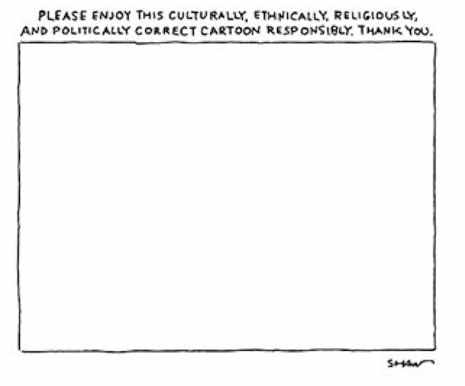
Politically Correct Drawing never published by Charlie Hebdo

Je serai poète et toi poésie,
SCRIBBLER

Tuesday, 9 December 2014

Zoella : Who Wrote Girl Online?


Who Wrote Girl Online?

A Blog Entirely Free of Ghosts (but which I previously published here)

postlead-books-zoella

Ghost writers aren’t uncommon, there are very few stigmas attached to the authors that use them or the writers that eventually come forward to claim a little responsibility.
Yet Zoella has taken a break from the internet in an uncanny case of literary déjà vu.
In the same way as an online backlash forces protagonist Penny offline in Girl Online, negative responses to the ‘help’ she received from a well-known young adult writer and a high-ranking editor has made Zoe Sugg, author, take a step back from social media (NB. she has NOT quit YouTube).
Previously, I mentioned Zoe Sugg, AKA Zoella, in a blog about thought-leadership. As a leading voice for fashionistas, YouTuber’s and young people the world over; I described Zoella as part one of a group of powerful online personalities that exemplify the ‘power of we’.
The release of Zoe Sugg’s first book emphasised her enviable, much-loved status. Girl Online disappeared off shelves faster than Harry Potter, selling a record-breaking 78,109 copies in the first week.
Yet even in the early days there were a few raised eyebrows. Readers and rivals questioned whether ‘Zoe Sugg’ was merely an ‘authorial manifestation’, a name slapped onto a book that somebody else wrote.
And as the reviews came pouring in, critiquing the story that is tooth-achingly sweet and more than a little predictable, this little chink became a fissure.
I should probably admit here that I spent four hours reading this book cover-to-cover, which is why I was intrigued when Penguin Random House admitted that Zoe Sugg’s first novel was not written entirely by the YouTube sensation.
“To be factually accurate,” claimed a spokesperson, “you would need to say Zoe Sugg did not write the book Girl Online on her own.”
So she had help.
Is this really a problem?
I have mixed feelings about the news, uncertain about how I feel about ghostwriting in general but also in the way the story has been handled.
Siobhan Curham, a young adult author, allegedly helped create Girl Online. Recognised in the acknowledgements as being ‘with [Zoella] ever step of the way’, it was this brief mention that has given rise to much of the speculation that Curham wrote the book. I sympathise for a ghostwriter whose novel rockets to success under the banner of somebody else’s name, however, what we need to remember is that a ghostwriter signs a contract. They agree to the terms and conditions of ghost-hood.
This means Curham would have known that she was going to sign away her rights to authorship or even co-authorship when she agreed to help Penguin Random House make Zoella’s first novel a reality. It wasn’t stolen from her and ‘thanking’ her supporters on twitter probably wasn’t best practice for a ghostwriter…
On the other hand, why didn’t the publisher think to make this information clear from the start?
Ghostwriting is a relatively common practice. In fact, going beyond the celebrity examples of Katie Price or David Beckham’s ghostwritten literature, plenty of popular novels, especially children and young adult literature, have shadow writers. R.L Stein’s children’s horror stories, Goosebumps, were ghostwritten by various writers; The Man With the Golden Gun was the first Bond novel to be written by someone other than Ian Fleming but it was not the last; and there are even unconfirmed rumours surrounding To Kill A Mockingbird’s potential link to Truman Capote.
Now, unsurprisingly, many have leapt on the opportunity to tear into Zoella for being dishonest.
However, despite the people calling Girl Online an act of fraud, or plagiarism (it is actually, by definition, neither), the sad fact is that Curham would never have received this attention if her name had been beneath the title.
Because Zoella is the name that sells. She is the entrepreneur, the personality, the businesswoman and the brand.
Whether or not she is an author, she is, and will remain, an inspiration for her fans, and a thought-leader who has carved out a niche in a world where multi-channel media reigns. With millions of subscribers who love her, an endorsement from Zoella on her YouTube channel will indubitably still be worth its weight in commercial advertising regardless of the current media scrutiny surrounding her abilities as a writer.
Zoella is taking the fall but really, if there is blame to lay, surely it should be laid upon an institution that perhaps needs a little bit of rethink. It would be nice for a ghostwriter to be recognised for their prose and for success to be shared when it is due…
…But if the story winds its way to its natural HEA, #WeLoveYouGirlOnline will be matched by #WeLoveYouZoella, Zoe Sugg will bounce back to our blue screens with a smile and the déjà vu will come full circle.
And, hopefully, Curham’s sales will skyrocket as well.
Girl Online
Penny discovers Girl Online is still loved by fans, (p.335)

Disclaimer: This blog is free of ghosts. We tested it with the Specter Detecter AND a PKE Meter, just for good measure. Also if you would like to read TEN MORE THINGS about why we shouldn’t be horrible to Zoe Sugg, read the piece on the Guardian by Matt Haig (author of The Humans). It is excellent. 

Je serai poète et toi poésie, 
SCRIBBLER

Thursday, 4 December 2014

Vloggers vs Bloggers: Who do you love more and why?


Bloggers vs Vloggers : 

Thought Leadership in the Age of Collectivity


Top fashion and beauty vlogger Zoella

Not that long ago I wrote about collective mourning, about how grief had changed because of the way that we use social media. But it’s not just our emotions that are shared.
Collectivity and collaboration have fast become the default mode of the 21st century.
Online social media has exploded and now more than ever, our personal and business success is dependent on the way that we work with the larger world around us: from people, to brands, to corporations.
We talk in terms of influencers and thought-leaders: the power of an individual voice discussing ideas with their audience. Establishing a person or business as one of these leaders is dependent upon their appeal and relevance within the larger whole, in inaugurating them into the collective voice and then making them stand out.
It can be tricky. Yet one of the least expensive and most effective ways to create a platform is to become part of the shared world of multichannel media. Tweeting, blogging, having a Facebook page – this programmes the self into the digital landscape. Plugging in, the virtually extended reach of a social media can be a dynamic tool in the would-be thought-leader’s arsenal.
This might seem strange, after all back in the beginning of blogs, around the early 1990s, they were just ‘web logs’: easy-to-add-to, often journal-like, sometimes inspired but often rambling, online diaries.
Now there are tech blogs, sex blogs, philosophy blogs, blogs about dogs, blogs about cats, blogs aboutdogs sitting on cats, and, of course, blogs like this one which offer a mix of business advice and current affairs analysis. Interestingly, as Andrew Sullivan discussed, ‘poised between media and blogs can be as nuanced and well-sourced as traditional journalism, but they have the immediacy of talk radio … blogging is changing the media world’. More than that, it is changing the world in general. Despite being online, they have power and prominence that increasingly impacts the ‘real’, offline world.
The Huffington Post, of course, is the prime example. The Guardian put it perfectly when they said that ‘the history of political blogging might be usefully divided into pre- and post-Huffington’. The Huffington Post turned an underdog hobby into a lucrative market space. Now, some bloggers are far more powerful than journalists. Some blogs offer the widest and most influential marketing tool available, if you just know how to tap into it.
They can drive traffic, generate sales, create additional content, and instigate new conversations. Informal, often colloquial, they’re a relaxed way of engaging an audience without spending thousands on a platform. It takes time and dedication but once the ball is rolling, it’s out there
For example, on Wednesday, I’ve been invited to a bloggers event hosted by Bloomsbury. It’s a Christmas Special event with James Runcie, whom many will now know because of his bromantic, 1950s Grantchester Mysteries, the first of which was recently dramatized for ITV. Whether you agree or disagree with the plaudits calling the television adaptation ‘the new Morse’ or the criticisms that it was ‘undemanding’, there is no doubt that overall the six-part adaptation of James Runcie’s Sidney Chambers and the Shadow of Death was successful. So I wondered – why invite bloggers, everyday people using social media, to this kind of event?
It’s to keep the conversation rolling whilst the professionals, ie. the journalists and critics, lose interest in the off season. Plus, the conversations of the big, relevant bloggers means the series, in print and on screen, will reach a bigger, more relevant audience. This works particularly well because bloggers use social media accounts in addition to their blogs– so content travels far and fast.
Beyond the bloggerati, there are the vloggerati. One sponsored three minute video or single tweet from the Digifest Generation of video bloggers can reach millions in moments; having just one of them at James Runcie’s event could reignite the conversation, attract more readers or viewers, sell thousands more copies.
Video bloggers, like their wordy counterparts, have become thought-leaders, influencers and trend-makers. Ranging from ‘vloggers’ like CharlieIsSoCoolLike, who rose to fame after vlogging ‘How to be English’, to the effervescent Jenna Marbles or the prominent beauty and fashion vlogger, Zoella, AKA Zoe Sugg – the fact is that they have become sensations on and offline.
Every one of these ‘professional internet humans’ has an invaluable stake in the media.
Unlike bloggers, often hidden behind their words, the vloggers appear closer to their audience. They speak to them, answer their comments in their videos, offer direct advice, engage and befriend them, albeit through a camera. Many recognise these fresh voices as key to reaching younger audiences, for commercial advertising but also as a replacement to broadcast and print media.
Both do engage though, and this is crucial, because they are directly appealing to the communal internet, putting themselves in the public eye and asking for feedback, even criticism. They generate an audience. Good ones then reply and engage with that audience; the one-way street of publication becomes a multichannel conversation.
Admittedly, vlogging and blogging have pros and cons, and they are not for everyone, not even for businesses striving to be thought-leaders.
However, in today’s shared, social, collective sphere, online media is an indubitable force. They are an intrinsic part of contemporary society.
My point is not to convince anyone to become a blogger or a vlogger. My point is this: brands and businesses, individuals and extended networks: no one can afford to ignore the pull and drive of the digital world. If you want to be a thought-leader, you need to embrace all sides of the media to engage your audience.
At the very worst, blogs and vlogs are narcissistic echo-chambers of the online world. But they have revolutionized the way that the media works. Blogs can be the equivalent of a column in a national paper. Vlogs can be a TedXtalk or a segment of primetime tv. They reach across the globe and enable collective and remote collaboration, thrive because they, as so eloquently put by Ernesto Priego, embody the ‘power of we’.
And if you want to be a thought-leader, that is one of the most powerful forces in this strange, new, digital world.

Je serai poète et toi poésie, 
SCRIBBLER
This blog was previously published by me for PHA Media 

Friday, 21 November 2014

Trolling : From Katie Hopkins to Julien Blanc


Julien Blanc and Katie Hopkins: Should we Feed the Trolls?


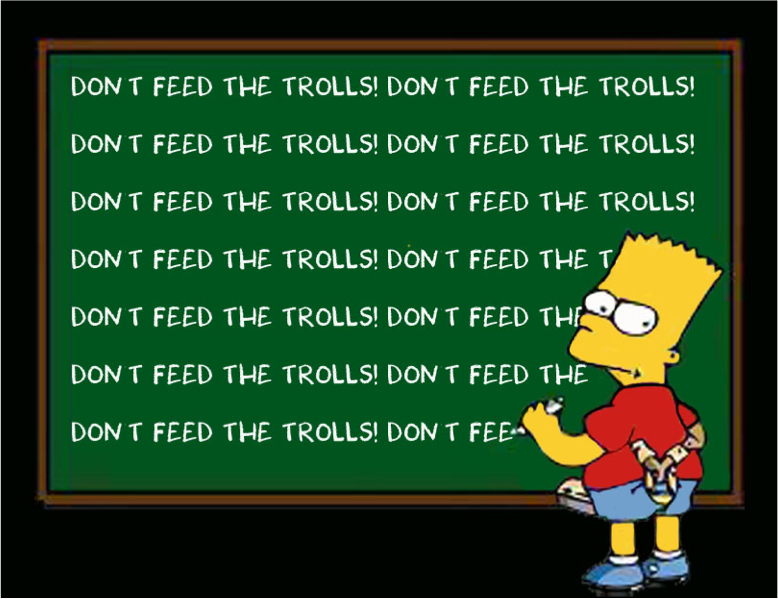
Don't Feed The Trolls
Disclaimer: All over the internet there are warnings about feeding the trolls. I am about to ignore them. Please bear with me.


When Katie Hopkins offered support to ‘controversial pick up artist’ Julien Blanc, according to the Huffington Post, the story surprised no one.
 Seeming to cultivate her status as a professional troll, she responded to the polls calling for Blanc to be denied a visa with a roll of her metaphorical eyes and once again managed to command the attention of every media outlet poised for her next inflammatory comment.

Blanc, a Swiss-American who claims to be able to ‘game’ women so ‘hard’ that they ‘beg’ for his attention, has been called the ‘Most Hated Man In The World’ after a video of him choking a woman in Tokyo went viral and Australia gave him the boot. And despite an apology interview with CNN’s Chris Cuomo, shaking the reputation of a racist and sexually violent misogynist is likely to take sometime.
 Did Katie Hopkins help him at all? Probably not. If anything, it surely emphasises his unenviable position. Why shouldn’t the Most Hated Man In The World have the support of Britain’s Most Hated Woman?
 But why don’t we look again at that tweet.
Accompanied by a photo of Blanc holding up a t-shirt, which has spawned almost as many headlines and hashtags as he has, Hopkins’ actual message seems to be: why is the UK afraid of a man who looks a lot like your average bloke about to go on a boozy holiday… and a lot less like the usual suspects who receive notice to ‘keep out of our country’.
 And I don’t like to admit it, but there’s the distinct possibility Hopkins might have an actual, valid, and (dare I say it) meaningful point.
 The vast power of social media is such that within days hundreds of thousands of people were signing up to keep Blanc’s ‘dating advice’ out of our country. There are two intriguing elements to this. The first is about the basic principles of free speech. The names on the sixteen-strong list of ‘banned persons’ from the Home Office belong to those ‘considered to be engaging in unacceptable behaviour by seeking to provoke, foment, glorify or justify terrorism’.
Thinking about what Hopkins posted, Julien Blanc doesn’t really fit into this category. Could the real question come down to freedom of speech? Can you really ban someone like Blanc on the basis of what he thinks?
What he reportedly offers is insight into making men sexually attractive. What the media revealed was a young chauvinist teaching seminars in demeaning and assaulting women. Indubitably unpleasant, his seminars are, unquestionably, ‘offensive… inappropriate’ and ‘emotionally scarring’. But no crime has been officially committed here. As Andy J. Semotiak said in his Forbes article, ‘simply holding obnoxious views is insufficient to deny entry’.
 Then the second point is this: would we have even have heard of Julien Blanc, would his name be as well known and his tactics as well publicised in the UK, if not for the heavy ‘no-platforming’ on the part of petitions desperate to keep him out?
 A ‘no platform’, encapsulates the idea that certain viewpoints have zero right to be expressed in public debate, and was described in The New Statesman. Powered by the vast power of social media, this ‘no platform’ for Julien Blanc worked so that within days hundreds of thousands of people were signing up to keep his ‘seduction advice’ out of our country.
 Does the success of the ‘no platform’ for Julien Blanc represent the power of the public voice? Does it suggest that we are stifling debate?
 It doesn’t really make much difference.
 Petitioning to keep him out gave him more attention and created a public profile through digital media that some people would pay for. The Guardian’s Marina Hyde certainly seems to agree, claiming that ‘bans turn ranting clerics you’ve never heard of into ones you never stop hearing about’.
 By lobbying against him, by creating a ‘no platform’, we essentially gave a little man with an even littler reputation a massive foothold in the all important column inches of the media. We fed the troll. We created the troll.
Now it doesn’t matter if he can come into the UK or not. Because now when he wants to go around spewing advice or his deliberately provocative life skills, people are going to listen through any and every medium he employs. They might not agree. They might not think what he says has any merit. But they will listen.
 This is precisely what we saw with Katie Hopkins, former Apprentice contestant and now professional ‘rent-a-gob’, Sun columnist, broadcaster and business woman. She made a name as someone with a sharp, often cruel tongue, usually appealing to some trending ‘whatever-ism’ of the day.
We gave her this platform though; we let her continue to post her many rancorous messages without censorship. Unlike Julien Blanc, for whom censorship has left him with the sole option of beaming in via Skype to talk to his British fans, Hopkins has been made to apologise a handful of times for offending people but almost always escapes further ridicule when she shrugs and tells the offendees it’s their fault for being offended.
She thrives because she trolls. And we let her.
She accepts and laughs at the outrage that she causes. And there’s always a small group somewhere accepting and laughing along with her.
Of course, there’s the slight question of whether Katie Hopkins is a traditional troll. She isn’t playing the ultimate devil’s advocate but equally she isn’t spouting opinions just to make Internet users so angry that their bloodied fingers expire trying to type an equally vitriolic defense. She seems to actually mean what she says, rather than saying it for the sake of irking 90% of the population.
Some love her for it and it maybe there’s an argument for saying her voice actually makes some issues come into the public eye that would otherwise be hidden from view. But the media definitely feeds her and if anyone tried to take her offline, I’m sure there would be outcry at those attempting to silence her voice.
My thought is that the media, particularly online and social media, complains about trolling and the spread of cyberbullying, but then it endorses or employs the same tactics when it suits the in vogue agenda.
Katie Hopkins has not empowered Katie Hopkins. Julien Blanc has not empowered Julien Blanc. The voice of shared media has.
Regardless of whether you think that Blanc should never hold a visa to the UK, or if you find Hopkins funny, multi-channel media has the power to make sure that Ice Buckets succeed, Comet-Landings disappear behind Kim Kardashian’s ginormous derrière, chauvinists become (un)popular icons, and trolls can stay beneath the crooked bridge, ready to gobble up any stray Billy-goats.
So I think this begs the question, and really the whole of this blog: should we feed the trolls?

Je serai poète et toi poésie,
 SCRIBBLER

ps. For more comments and information - why not go to the PHA Media website where I first published this post!