Showing posts with label PR. Show all posts

Saturday, 11 July 2015

The Matt Haig Question: Can Men Write A Feminist Novel?

Matt Haig, the award-winning author of Reasons to Stay Alive, was recently lambasted online for wanting to write a book on the ‘perils of masculinity’. Having sent out the concept on twitter, scores of women decided to lampoon his idea as ‘anti - feminist’.
But why?
he for she
“How can we effect change in the world when only half of it is invited or feel welcome to participate in the conversation?”

In January, Emma Watson spoke of her pride in being part of the HeForShe movement. She told us that feminism is a matter for both genders, and has benefits for women and men. When Matt Haig expressed an interest in writing about gender, however, twitter descended. According to them, there are enough books out there about men written by men. And here was another one, coming along to try and ‘mansplain’ feminism.
To an extent, it’s possible to see where they’re coming from. There are a lot of books by men about men for men, and swathes of articles as testament.
Yet Haig is the writer whose memoir deals so sensitively with depression and the social stigmas surrounding mental health. Having repeatedly clarified his reason for thinking ‘toxic masculinity’ could be an interesting and timely subject matter – sexism benefits men, but also hurts men – surely a similarly sensitive novel would be a boon to feminism?
Put this alongside recent headlines asking why, when Britain leads the world in female entrepreneurship, gender barriers remain in ‘boys club’ industries. Or why, though we’ve seen feminism become a mainstream trend in pop-culture, Mad Max’s more-than-capable Imperator Furiosa was met by scorn and a boycott from Male Rights Activists. As was the Girls Who Code group. And FIFA 16’s introduction of women’s football teams.
  Surely a novel, a book that would make people acknowledge and challenge the heated subject of gender equality, could only be good?  Stories are, after all, integral to how we communicate and consequently one of the greatest tools of change.   

Let me take a little tangent by looking at two PR campaigns.

Most of us will have seen adverts that deal with modern preconceptions of what it’s like to be woman. Two particularly poignant recent examples are P&G’s Always ‘Like a Girl’ campaign, and Miss Representation’s ‘The Mask You Live In’.    

 In the Always’ ‘Like a Girl’ advert, the director asks a series of pre-and post-adolescent women and men to run like a girl, fight like a girl, hit like a girl. The results are striking in that they show young girls putting their all into each request – they sprint, they punch, they look fierce. Their older counterparts fluff their responses, play with their hair, mock themselves as they act ‘like a girl’. They essentially do what the boys in the ad do. They imagine that girls cannot do what boys do. Cannot be as fast, strong or serious. The question emerges, why can’t ‘run like a girl’ mean winning the race?

When did doing something ‘like a girl’ become an insult?

A year later, the campaign attained a coveted Super Bowl ad-space. Following up on the previous video’s demonstration of the ‘devastating’ effects of being taught ‘like a girl’ is a bad thing, it showed it’s possible to change the narrative. Doing something ‘like a girl’ can mean doing amazing things. On the other hand, 2013’s ‘The Mask You Live In’ looked at the impact of the phrase ‘be a man’ upon how men connect with their emotions. 

‘Be a man,’ they argue, is one of the most damaging things a young boy can hear.

It expresses a lack of value for qualities that have been ‘feminised’. It means not crying. Dealing with problems alone. Not talking about fear or anger or hurt. It’s a problem that run so deep that, as the Guardian’s Owen Jones wrote, it can kill. The key thing here is that just like the ‘Like a Girl’ campaign, the values of ‘The Masks You Live In’ show a polarized narrative. In it femininity is bad, masculinity good. Both have demonstrable, painful, consequences. Because even now, men are still expected to be dominant, to be natural leaders, to be physically and emotionally impermeable. This is not healthy for men – and it’s not healthy for women either as they experience the fall-out.  Importantly, when you see brilliant campaigns like these, you start to think about the bigger problems. You start to talk about them. They take fantastic stories, focusing on how boys and girls grow up in society, and turn them into a call to action. They’re not exactly subtle but they explore the need to communicate about the problems inherent within society in order for change. Yet these are stories told in three minutes.

Imagine how powerful a whole novel might be in addressing some of those same feminist subjects?

Returning then to the twitter onslaught Matt Haig experienced. Like Miss Representation, he considered investigating how masculinity in its current form damages men, and how feminism – the desire for gender equality – would thusly be good for everyone.
Haig’s plight, it seems, is partly that women don’t want men to lead feminism, which is valid. He wanted to tackle ‘toxic masculinity’ from a male perspective. Considering he identifies as male, this seems sensible since he can draw from his experiences. Moreover, penning a book exploring this issue does not mean Haig or any other male writer (Joss Whedon say) favours a men-first form of feminism.
It just means that he’s talking about the problem too.
A book’s ability to make people think and talk about problems they might not previously even have known is unparalleled.
They start conversations without even meaning to.
They can unravel problems and weave them into a tale, spin many hidden nuances into something terrifying, beautiful and complex.

This is the power of stories.

It’s why the campaigns we remember are the ones that deliver ideas not pitches.
So whilst I don’t want men to lead feminism, I also don’t think that we should begrudge men for wanting to be part of the conversation. They should be part of the solution. Especially when it comes to changing views on masculinity.
As long as there are great stories being told that challenge sexism, there will be conversations that should be valued, not vilified.


Je serai poète et toi poésie,
SCRIBBLER

Friday, 20 February 2015

Scare Tactics : Why Don Draper Had It Right


Scare Tactics 

 ‘Fear’ as a Successful Communications Tool

fear communications
The value of emotion in selling products, and papers, is more or less indubitable.
Christmas: every advert pulls on the heartstrings. Headlines about fairness and altruism pepper the pages of our newspapers.
February: roses are red, violets are blue and romance is in the air for every marketing campaign and headline that can possible squeeze in an iota of an excuse for doing so.
Yet this is not just a gimmick of once-a-year holidays. It is a strategic part of brand narratives from McDonalds to Nike, Virgin to Jack Wills.
And one of the most effective emotions is fear.
Take as an example the full-sized polar bear released in London this past January. It disrupted tube-commuters’ usual routine of ‘studiously minding own business and ensuring zero eye contact with anyone’ with a potential panic attack.
“Is it real?!” People begged the cameras recording their mixed reactions of fear and curiosity.
Twitter went crazy. Videos and photos spread across the Internet.

 As a stunt it grabbed headlines – partly because a giant white bear on the Jubilee line makes a great photo – but it also embodied the new television show it was publicising, Fortitude, by using a bear that is something of a sinister motif for danger in the show to create a similar threatened feeling in the British pubic.  Moreover, considering Sky’s current adverts saying ‘not all television is created equal’, which suggests their programmes are somewhat more challenging, more intriguing, this stunt certainly seemed to capture hearts and minds with a comparable emotive thread.
An ‘Emotion Factor’ constitutes a central part of helping a consumer to bond with a brand, a business, a product, a person.
Hardly a new concept, Dale Carnegie identified emotions as key for business people who want to appeal to their customers back in 1936 and it has been linchpin in communications of all kinds ever since. There are books dedicated to it, and academic studies.
Those who have never watched Mad Men might be forgiven for wondering then why I’m talking about fear. Almost everyone has been told sex sells as demonstrated by Davidoff cologne or Virgin Atlantic adverts. Many will have experienced how feeling empowered makes that totally unaffordable car sound like a good idea, or how humour makes one website seem simpler and friendlier than the other.
But to quote Don Draper: “Advertising is based on one thing: happiness. And do you know what happiness is? … It’s freedom from fear.”
The same applies in building a narrative in public relations.
Telling a story for a business is an integral part of PR because it’s all about looking for the story that will bring a brand’s message to life. A story can build or bulldoze a reputation, manage or frustrate consumers. So whether it’s through a message, a logo, a CEO or even a product, telling a superficial tale is not going to win over a busy journalist or capture the attention of a digital audience. Only a quality, sophisticated story can do that. Preferably one that’s succinct and can fit into the required column inches.

This is where fear comes in. Good stories need an element of fear.  Something for a hero to overcome. That hero might be the consumer or the product or the business as a whole. But if all is happiness, simplicity, friendliness, and humour, what’s the point in being a hero, of wanting more than this? How can you feel powerful driving that car, or sexy travelling on that flight, or clever because you chose this brand, if there’s nothing to fear?
Nike do this well, painting the consumer as both hero and villain. Their base, lazy self doesn’t want to wake up, to run, to push up that hill. Can their strong, inner hero win out? Yes they can. Likewise, the anti-bank narrative taken up by new financial technology (fintech) companies often paint themselves as ‘Jack’ characters going up against fearsome ‘Giants’. A traditional story becomes a strategy rooted in the potential to conquer fear.
By identifying what seems scary, the opportunity to expose ways to overcome the monster emerges. This encourages people to believe in the story, to come to their own conclusions and hopefully align their opinions with that of the brand. Since they value this self-made deduction more than those shoved down their throats, the business’ story then becomes their story. Loyalty is created. A reputation with consumers established.
Crucially different from the fear inspired by some political propaganda or scaremongering, it’s important to note that this kind of fear is also distinct from manipulation. Using fear is not a way of coercing consumers into falling for a web of lies.  It is, however, a means of a businesses connecting on a human level with the people it needs to connect with and a way of cohering a brand with both left-brain ideas and right-brain emotions.
So whether it’s by tapping into the fear of missing out, the reality of heart disease, the creepiness of unseen germs, or just the Very Dangerous World – businesses need to really start thinking about what people fear and what story they want to tell in the age of anxiety.

Je serai poète et toi poésie, 
SCRIBBLER

Wednesday, 7 January 2015

Je Suis Charlie : Journalism and Free Speech


Je Suis Charlie : 

Journalism and the Freedom of Silence and Speech


Je suis Charlie Hebdo
Sony was always going to release The Interview.
The story of a fictional plot to assassinate North Korean leader Kim Jong Un, the film is a bowl of provocations that is full of silliness spiced up with a splash of the satirical.
It watches like the less-hilarious cousin of the cult classic Team America, where Kim Jong Il, Un’s father, turned out to be a creepy slug-like alien dressed in a meat suit. Not seeing the funny side, North Korea responded by calling The Interview a ‘blatant act of terrorism’. This was followed by a series of cyber-attacks on Sony, which revealed important secrets like ‘not everyone loves Angelina Jolie’. Therefore, with increasing concerns about the safety of those involved, they briefly delayed the film’s release.
It could not be better publicity for a film than the potential for not being seen. Not to mention that the subject of the film was the thing trying ban it.
But they were always going to release it. More than the fact that appearing to give in to the threats of violence looked uncannily like a PR stunt, it is the right of James Franco and Seth Rogan to write, direct and make such a film.
The First Amendment protects them: the right to complete Free Speech.
Even when it offends.
It is also the same right that enshrines the rabble-rousing journalism of Charlie Hebdo, as laid down in theDeclarations of the Rights of Man and of the Citizen and the European Convention of Human Rights. Not quite as liberal as the First Amendment, it still prevents censorship of any written publication. This is why, although the French government may not have always appreciated the cartoons or writings of Charlie Hebdo, they still defended their Voltaire-inspired, Enlightenment right to freedom of expression.


With the murders of two policemen and ten of Charlie Hebdo’s staff, including the political satirist Charbonnier, the threats against writers and their right to create art came into full relief.

Perceived as a deliberate attack on freedom, within hours Salman Rushdie had released an online statement. The world was reminded of the ten years he spent in hiding, and the three translators that were killed, because of a death fatwa placed upon him after The Satanic Verses offended Iranian clergy.
Not long after, Neil Gaiman reposted a defence of free speech even when it’s ‘icky’, recalling how his own comic on based on the biblical Book of Judges nearly sent his publisher to prison, translating the attack in Paris as one aimed at making the world narrower, duller.
It reminded me of The House of Journalists A debut from Tim Finch, Director of Communications at IPPR, which tells the story of refugee writers finding sanctuary in an increasingly sinister House in the UK whilst the brutal backgrounds of his characters come frighteningly close to those of the Charlie Hebdo offices.
Interestingly, the narrative voice in The House of Journalists is the third person plural – ‘we’.
I’ve written a lot about this ‘we’ that now epitomises today’s socially extended sense of self and culture. I believe this ‘we’ will help Paris, and artists, and all defenders of liberalism and free speech because it is the socially-created, digitally-enabled PR response to these terrible events.
Across the world ‘Je Suis Charlie’ has trended. As hashtags, on signs, in cartoons and in articles: there is the same culture of ‘we’ witnessed when when millions of strangers poured ice water over their heads, or when ‘I Will Ride With You’ was the reaction to the siege in Australia in December.
An expression of collectivity, ‘we’ focalises social solidarity. A single message.
Some will say that social outpourings of this kind are far from useful. Remember when ‘Bring Back Our Girls’ was ridiculed for being little more than public self-aggrandisement? And not everyone liked the Ice Bucket Challenge. However, when the first reaction of artists of all kinds, people of all religions, voices of all opinions, is to create a mantra reminding the world we are in this together, there is only one way to interpret it.
As Orwell supposedly said, ‘Journalism is printing what someone else does not want printed: everything else is public relations.’
Whilst the cartoons of Charb, Wolinski and Cabu were undeniably incendiary, they were also the epitome of those human rights that we so often take for granted.

It was journalism.

It was their job, as journalists, to write. Even when each word might contain a tiny revolution, or when printing might upset us as much as it might inspire us.
“Nous sommes tous Charlie.” After all, the world without freedom of speech would be a much duller place, even if it would be less offensive.

Charlie Hebdo
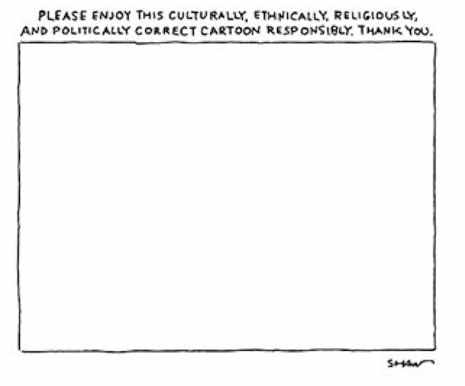
Politically Correct Drawing never published by Charlie Hebdo

Je serai poète et toi poésie,
SCRIBBLER

Thursday, 4 December 2014

Vloggers vs Bloggers: Who do you love more and why?


Bloggers vs Vloggers : 

Thought Leadership in the Age of Collectivity


Top fashion and beauty vlogger Zoella

Not that long ago I wrote about collective mourning, about how grief had changed because of the way that we use social media. But it’s not just our emotions that are shared.
Collectivity and collaboration have fast become the default mode of the 21st century.
Online social media has exploded and now more than ever, our personal and business success is dependent on the way that we work with the larger world around us: from people, to brands, to corporations.
We talk in terms of influencers and thought-leaders: the power of an individual voice discussing ideas with their audience. Establishing a person or business as one of these leaders is dependent upon their appeal and relevance within the larger whole, in inaugurating them into the collective voice and then making them stand out.
It can be tricky. Yet one of the least expensive and most effective ways to create a platform is to become part of the shared world of multichannel media. Tweeting, blogging, having a Facebook page – this programmes the self into the digital landscape. Plugging in, the virtually extended reach of a social media can be a dynamic tool in the would-be thought-leader’s arsenal.
This might seem strange, after all back in the beginning of blogs, around the early 1990s, they were just ‘web logs’: easy-to-add-to, often journal-like, sometimes inspired but often rambling, online diaries.
Now there are tech blogs, sex blogs, philosophy blogs, blogs about dogs, blogs about cats, blogs aboutdogs sitting on cats, and, of course, blogs like this one which offer a mix of business advice and current affairs analysis. Interestingly, as Andrew Sullivan discussed, ‘poised between media and blogs can be as nuanced and well-sourced as traditional journalism, but they have the immediacy of talk radio … blogging is changing the media world’. More than that, it is changing the world in general. Despite being online, they have power and prominence that increasingly impacts the ‘real’, offline world.
The Huffington Post, of course, is the prime example. The Guardian put it perfectly when they said that ‘the history of political blogging might be usefully divided into pre- and post-Huffington’. The Huffington Post turned an underdog hobby into a lucrative market space. Now, some bloggers are far more powerful than journalists. Some blogs offer the widest and most influential marketing tool available, if you just know how to tap into it.
They can drive traffic, generate sales, create additional content, and instigate new conversations. Informal, often colloquial, they’re a relaxed way of engaging an audience without spending thousands on a platform. It takes time and dedication but once the ball is rolling, it’s out there
For example, on Wednesday, I’ve been invited to a bloggers event hosted by Bloomsbury. It’s a Christmas Special event with James Runcie, whom many will now know because of his bromantic, 1950s Grantchester Mysteries, the first of which was recently dramatized for ITV. Whether you agree or disagree with the plaudits calling the television adaptation ‘the new Morse’ or the criticisms that it was ‘undemanding’, there is no doubt that overall the six-part adaptation of James Runcie’s Sidney Chambers and the Shadow of Death was successful. So I wondered – why invite bloggers, everyday people using social media, to this kind of event?
It’s to keep the conversation rolling whilst the professionals, ie. the journalists and critics, lose interest in the off season. Plus, the conversations of the big, relevant bloggers means the series, in print and on screen, will reach a bigger, more relevant audience. This works particularly well because bloggers use social media accounts in addition to their blogs– so content travels far and fast.
Beyond the bloggerati, there are the vloggerati. One sponsored three minute video or single tweet from the Digifest Generation of video bloggers can reach millions in moments; having just one of them at James Runcie’s event could reignite the conversation, attract more readers or viewers, sell thousands more copies.
Video bloggers, like their wordy counterparts, have become thought-leaders, influencers and trend-makers. Ranging from ‘vloggers’ like CharlieIsSoCoolLike, who rose to fame after vlogging ‘How to be English’, to the effervescent Jenna Marbles or the prominent beauty and fashion vlogger, Zoella, AKA Zoe Sugg – the fact is that they have become sensations on and offline.
Every one of these ‘professional internet humans’ has an invaluable stake in the media.
Unlike bloggers, often hidden behind their words, the vloggers appear closer to their audience. They speak to them, answer their comments in their videos, offer direct advice, engage and befriend them, albeit through a camera. Many recognise these fresh voices as key to reaching younger audiences, for commercial advertising but also as a replacement to broadcast and print media.
Both do engage though, and this is crucial, because they are directly appealing to the communal internet, putting themselves in the public eye and asking for feedback, even criticism. They generate an audience. Good ones then reply and engage with that audience; the one-way street of publication becomes a multichannel conversation.
Admittedly, vlogging and blogging have pros and cons, and they are not for everyone, not even for businesses striving to be thought-leaders.
However, in today’s shared, social, collective sphere, online media is an indubitable force. They are an intrinsic part of contemporary society.
My point is not to convince anyone to become a blogger or a vlogger. My point is this: brands and businesses, individuals and extended networks: no one can afford to ignore the pull and drive of the digital world. If you want to be a thought-leader, you need to embrace all sides of the media to engage your audience.
At the very worst, blogs and vlogs are narcissistic echo-chambers of the online world. But they have revolutionized the way that the media works. Blogs can be the equivalent of a column in a national paper. Vlogs can be a TedXtalk or a segment of primetime tv. They reach across the globe and enable collective and remote collaboration, thrive because they, as so eloquently put by Ernesto Priego, embody the ‘power of we’.
And if you want to be a thought-leader, that is one of the most powerful forces in this strange, new, digital world.

Je serai poète et toi poésie, 
SCRIBBLER

This blog was previously published by me for PHA Media