Showing posts with label bloggers. Show all posts

Wednesday, 19 August 2015

Of Books & Blogs (or how to get over a bad writing day)

typewriter
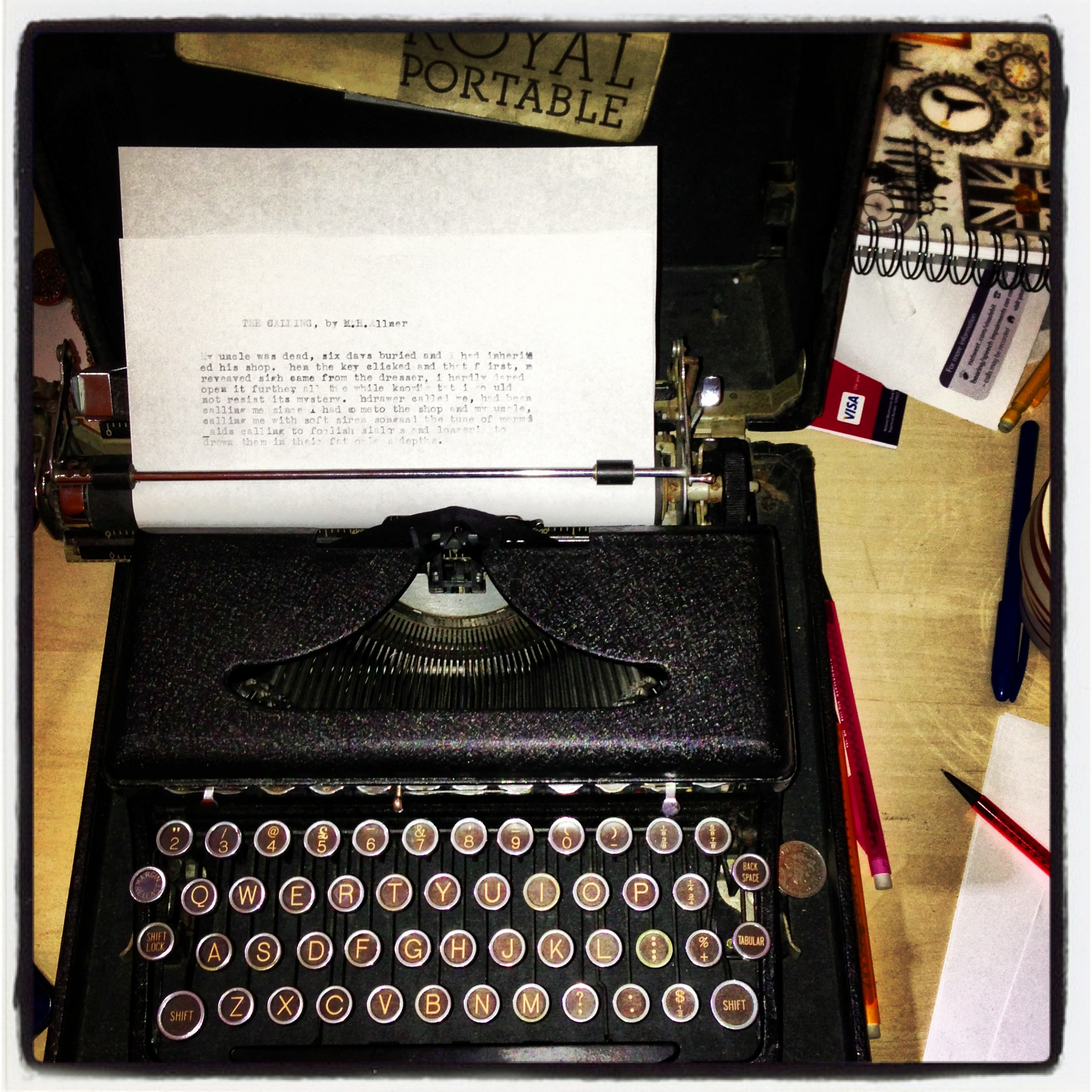
Spending the weekend out of London to look after the family dog, my plan was also to spend some quality time writing. I figured I’d get out my typewriter - there’s no where really to keep it in my flat (and the walls are definitely too thin) meaning it currently lives at my parents – so I lug it downstairs and set it up in the kitchen.
I make a coffee. I stack my notes up next to me. I turn on my dad’s epic sound system prepped to blast the soundtrack I’ve put together. Then sitting with a happy dog at my feet, I ready the page, my hands hovering over the keys. And I can feel them: the words at the corners of my mind, so close I can smell the ink… my fingers twitch...
And nothing happens.
Like having that ‘tip of the tongue’ feeling, the words buzzed, blurred and faded before they could become sentiment or sentence.
I tried. I probably wrote two or three pages of first paragraphs and outlines, odd bits of dialogue and random incomplete phrases. But nothing concrete found its way onto the page.
typewriter

How people write has always fascinated me.

Gore Vidal established the now inevitable coffee/writer relationship, swearing by a ritual of ‘First a coffee, then a bowel movement and then the muse joins me;’ whereas Balzac scribbled furiously for fifteen hours every day (he did succeed in writing hundreds of novels) and fetishised every sentence in editorial. So when it comes to the living, sometimes I desperately wonder: Where do your ideas come from, Mr Gaiman? How did you find the link between birds and brains Mr Powers? What made you want to write, Ms Atwood? And for that matter: what keeps you going?
What keeps them going, what their ‘fix’ is, what’s really going on behind the invisible wall of the page – it’s intriguing as much as it is, perhaps, a little voyeuristic (would you really want to share your bestworst habits with curious minds?).
There’s a book I received, I’d like to say for a birthday, about exactly this ‘Secret Life of Authors.’ Illuming the trinkets and rituals that inspire some of today’s writers, it will one day make excellent toilet reading with each insight coming in page long snippets. Will Self, Ian Rankin, A.S Byatt, Jonathan Lethem, Nicole Krauss, Tash Aw – they all have ‘things’, ‘hobbyhorses’ that inspire or trigger that avalanche of thought.

When I was younger and writing was easier, I never understood why The Adults complained about bleeding into their writing.

Couldn’t they just exist there in the words? All I wanted to do was write: at break time, lunchtime, prep time, dinner time, after dinner, after lights out. I had some great teachers. My French teacher – who you can see giving a TedXTalk – was an Oxford man who used to let me write in his class because if I cared more about words then his lesson, then I should follow that passion. Another, now more commonly know as author Virginia McGregor, even started up a creative writing group in which half the time I’d sit doing my own thing because prompts have never triggered much for me. She allowed it, mostly.
Now, I can sort of see why people who want to write become bogged down. After all, there I was, ready to write, notes at hand, perfect music, perfect day, perfect, perfect, perfect. And nothing. Not an inkling. Not even a hint of an inkling. Stilted. Broken. Blank.
Perhaps I overdid it – there was such a sense of preparation about being on the farm, with the typewriter and the music and the old dog. It was like scheduling a romantic evening then realising it feels like a funeral with the dead flowers and candles and mannered conversation.
So I stopped writing. I turned off the music. I pulled the pages from the typewriter, stacked them on top of my notes (who knows, maybe a flake of genius is in there after all #hoarder). And I went outside with the dog to finish my third coffee.

coffee

Right now, I’m sure there’s a few readers shaking their heads.

What’s the first rule of aspiring novelists? Keep going - write – write anything – just bloody write.
But I hate that rule.
I don’t write because other people tell me to finish. I don’t write for the sake of writing. I write for the sake of me. Because when I don’t write it’s like when a hangry person hasn’t eaten.
Obviously, if you want to be a writer then time has to be spent writing. Because if only you’d stop talking about your novel and start writing your novel, because if only you made time for your novel instead of complaining about your work hours, because if only you’d just put one word in front of the other and finish what you’ve started then maybe – maybe – you’ll be en route to being an author.
But it shouldn’t mean sitting with half-formed things twisting beneath your fingers that aren’t ready. Forcing words out for the sake of it shouldn’t be the first titbit of advice to give to anyone writing their book.
Sometimes, that approach can be more damaging than helpful. It can make you resent the work, want to neglect the idea.
Personally, the feeling of Presque Vu is usually because I’m worn through and I need to do something else. It’s not writer’s block (where the blank page is winning so hard it hurts and it really is a matter of writing anything to defeat it), this is the feeling of otherness that comes from too many expectations and pressure. When my head is in it but the rest is pure automaton.

So here’s what I do if writing feels like falsehood.

  1. Write something else. Blogs are good for this and they often relieve some of that pressure.
  2. Make notes. Draw plans. Draw characters. Draw a tree or a map. Whatever, do something with your hands.
  3. Read. Books are good for the soul, make you more intelligent, stave off dementia, and are the blood of good writing. Just ask Hemingway.
  4. Watch a film – I’m not talking a Netflix binge. Watching something challenging or a documentary that ties into your book can help.
  5. Drink - coffee, tea, whiskey, Hangman's Blood, pick your poison and have a cup of your favourite brew if you think it'll put you in the zone.
  6. Talk to yourself. Struggling with dialogue? Act it out. You might look like a lunatic but ask Nerd Cactus and you’ll find at least one of them finds this central to her creative output.
  7. Talk to someone else – not about writing. Leave the book alone.
  8. Go for a walk. Go enjoy the outdoors. Get on a bus and go somewhere. Sometimes we spend so much time inside four walls, it’s just not healthful. Visit life.
  9. Do something you enjoy – whether that’s singing like no one can hear you, dancing around in your underwear, or throwing fruit off a rooftop – go find your happy place.
  10. Don't beat yourself up over it. If you're writing regularly and not just talking about writing regularly, these days will happen. It's a bad writing day. They're there to make the good ones even better.

Je serai poète et toi poésie,
SCRIBBLER

Thursday, 4 December 2014

Vloggers vs Bloggers: Who do you love more and why?


Bloggers vs Vloggers : 

Thought Leadership in the Age of Collectivity


Top fashion and beauty vlogger Zoella

Not that long ago I wrote about collective mourning, about how grief had changed because of the way that we use social media. But it’s not just our emotions that are shared.
Collectivity and collaboration have fast become the default mode of the 21st century.
Online social media has exploded and now more than ever, our personal and business success is dependent on the way that we work with the larger world around us: from people, to brands, to corporations.
We talk in terms of influencers and thought-leaders: the power of an individual voice discussing ideas with their audience. Establishing a person or business as one of these leaders is dependent upon their appeal and relevance within the larger whole, in inaugurating them into the collective voice and then making them stand out.
It can be tricky. Yet one of the least expensive and most effective ways to create a platform is to become part of the shared world of multichannel media. Tweeting, blogging, having a Facebook page – this programmes the self into the digital landscape. Plugging in, the virtually extended reach of a social media can be a dynamic tool in the would-be thought-leader’s arsenal.
This might seem strange, after all back in the beginning of blogs, around the early 1990s, they were just ‘web logs’: easy-to-add-to, often journal-like, sometimes inspired but often rambling, online diaries.
Now there are tech blogs, sex blogs, philosophy blogs, blogs about dogs, blogs about cats, blogs aboutdogs sitting on cats, and, of course, blogs like this one which offer a mix of business advice and current affairs analysis. Interestingly, as Andrew Sullivan discussed, ‘poised between media and blogs can be as nuanced and well-sourced as traditional journalism, but they have the immediacy of talk radio … blogging is changing the media world’. More than that, it is changing the world in general. Despite being online, they have power and prominence that increasingly impacts the ‘real’, offline world.
The Huffington Post, of course, is the prime example. The Guardian put it perfectly when they said that ‘the history of political blogging might be usefully divided into pre- and post-Huffington’. The Huffington Post turned an underdog hobby into a lucrative market space. Now, some bloggers are far more powerful than journalists. Some blogs offer the widest and most influential marketing tool available, if you just know how to tap into it.
They can drive traffic, generate sales, create additional content, and instigate new conversations. Informal, often colloquial, they’re a relaxed way of engaging an audience without spending thousands on a platform. It takes time and dedication but once the ball is rolling, it’s out there
For example, on Wednesday, I’ve been invited to a bloggers event hosted by Bloomsbury. It’s a Christmas Special event with James Runcie, whom many will now know because of his bromantic, 1950s Grantchester Mysteries, the first of which was recently dramatized for ITV. Whether you agree or disagree with the plaudits calling the television adaptation ‘the new Morse’ or the criticisms that it was ‘undemanding’, there is no doubt that overall the six-part adaptation of James Runcie’s Sidney Chambers and the Shadow of Death was successful. So I wondered – why invite bloggers, everyday people using social media, to this kind of event?
It’s to keep the conversation rolling whilst the professionals, ie. the journalists and critics, lose interest in the off season. Plus, the conversations of the big, relevant bloggers means the series, in print and on screen, will reach a bigger, more relevant audience. This works particularly well because bloggers use social media accounts in addition to their blogs– so content travels far and fast.
Beyond the bloggerati, there are the vloggerati. One sponsored three minute video or single tweet from the Digifest Generation of video bloggers can reach millions in moments; having just one of them at James Runcie’s event could reignite the conversation, attract more readers or viewers, sell thousands more copies.
Video bloggers, like their wordy counterparts, have become thought-leaders, influencers and trend-makers. Ranging from ‘vloggers’ like CharlieIsSoCoolLike, who rose to fame after vlogging ‘How to be English’, to the effervescent Jenna Marbles or the prominent beauty and fashion vlogger, Zoella, AKA Zoe Sugg – the fact is that they have become sensations on and offline.
Every one of these ‘professional internet humans’ has an invaluable stake in the media.
Unlike bloggers, often hidden behind their words, the vloggers appear closer to their audience. They speak to them, answer their comments in their videos, offer direct advice, engage and befriend them, albeit through a camera. Many recognise these fresh voices as key to reaching younger audiences, for commercial advertising but also as a replacement to broadcast and print media.
Both do engage though, and this is crucial, because they are directly appealing to the communal internet, putting themselves in the public eye and asking for feedback, even criticism. They generate an audience. Good ones then reply and engage with that audience; the one-way street of publication becomes a multichannel conversation.
Admittedly, vlogging and blogging have pros and cons, and they are not for everyone, not even for businesses striving to be thought-leaders.
However, in today’s shared, social, collective sphere, online media is an indubitable force. They are an intrinsic part of contemporary society.
My point is not to convince anyone to become a blogger or a vlogger. My point is this: brands and businesses, individuals and extended networks: no one can afford to ignore the pull and drive of the digital world. If you want to be a thought-leader, you need to embrace all sides of the media to engage your audience.
At the very worst, blogs and vlogs are narcissistic echo-chambers of the online world. But they have revolutionized the way that the media works. Blogs can be the equivalent of a column in a national paper. Vlogs can be a TedXtalk or a segment of primetime tv. They reach across the globe and enable collective and remote collaboration, thrive because they, as so eloquently put by Ernesto Priego, embody the ‘power of we’.
And if you want to be a thought-leader, that is one of the most powerful forces in this strange, new, digital world.

Je serai poète et toi poésie, 
SCRIBBLER

This blog was previously published by me for PHA Media