Thursday, 3 July 2014

The Internet of Things


Brave New Digital World

The Internet of Things and Questions on the Cognitive


London Technology Week took place in June and, for those that know me, this is kind of an awesome deal. 

Why? Because my dissertation of strange and exciting ideas focuses on this idea called Extended Mind Theory. It all started with these two philosopher types, Andy Clark and David Chalmers, who wrote an essay in the early 1990s positing a form of 'active externalism'. This, most simply put, is the idea that there is a dynamic and constantly developing relationship between our minds (ie. our cognitive powers such as thinking, remembering etc) and the external world around us. 

For example: it's pretty normal to use calenders to remember events like birthdays or meetings, and almost everyone uses their mobile phone to store other people's numbers/address/email (or perhaps a phone/address book). We believe, because these events/numbers/emails correspond to a name in our little calenders/phones/books that the information is true. We believe it the authenticity of the information stored inside these external objects. But storing information in this way has historically been associated with our ability to remember, a 'mental event' that takes place inside our brains. So in the end, Extended Mind Theory (let's call it EMT), as suggested by Clark and Chalmers, argues that the hegemony of skin and skull is broken by things like notebooks (Otto's in their case) or more recently mobile phones. They act as the mind acts, storing and reliably retrieving information for us.

As Clark and Chalmer's put it:
'If, as we confront some task, a part of the world functions as a process which, were it done in the head, we would have no hesitation in recognizing as part of the cognitive process, then that part of the world is (so we claim) part of the cognitive process. Cognitive processes ain't (all) in the head!'

A bit like this. That pencil would have been handy.

Right so... what does this have to do with London Technology Week? Well it's because during those few days, attention came to the much-spoken-about, not-so-much-understood idea of 'The Internet of Things'. 

Considering how much the term is bandied around, it sometimes feels like people either know exactly what they're talking about when they discuss The Internet of Things or absolutely nothing at all. It's not a new idea though. Not exactly. A basic breakdown is simply that it's inanimate objects - thermostats, streetlamps, mobile phones, watches, shoes, that sort of 'thing' - only connected to the internet. 


"That's billion with a B" - interesting video here if you want to know more from Not-Me

And why connect all that stuff to the internet? Ok, good point. Think about the amount of runners now who have GPS, a heart rate monitor and a personal trainer all linked up through their watches or phones. In fact,  I believe Nike have trainers that come complete with a GPS in the heel so you can calculate how far and fast you run through their running app! I'd love me some of those! As for thermostats, if you're always turning the heat up in the wee hours of the night because you're chilly, your new 'Internet of Thermostats' will store that information and put it to use so that instead of you waking up with cold feet and needing the heat on, the computer can set the right temperature for going to sleep, staying asleep and waking up, all before you so much as shiver. A great article to check out to see how 'Things' and Smart Technology are adapting is Leo Mirani's in Quartz

Hang on, so what does this have to do with EMT again, that's why you're so excited about London Technology Week and the ideas behind this stuff right? Yup! All in all, the ideas driving The Internet of Things are probably the most fascinating because it's a marked step in terms of our social evolution but it's also fascinating when considering our cognitive evolution. There have been several articles written in the not-so-distant-future about how the internet, especially search engines like google, are affecting us. Is Google Making Us Stupid? That's the now-famous question asked by Nicholas Carr in 2008 and it's still pertinent today. Many of us will not bother to remember certain things because Google can be accessed whenever and however we want through Smart technology. Many more of us no longer bother with the epic dinner table debates on who wrote what song or who won what race or what the difference is between a pond and a lake, because at the touch of a button: Google will tell us. 

But since it's so reliably used in this way, since it directs our belief system and remembers our favourite searches, and since it not-so-surreptitiously lays down a traceable path from A to B in much the same way that our minds would do exactly that when laying down new information - what implications does this have for concepts such as active externalism and EMT? Could this mean that somehow, everything Google knows, we now 'know' in the way that we 'know' where our shoes are in the morning or where we were on 9/11? It seems ridiculous to support such a notion. It seems counter-intuitive. 

A more likely scenario is that much like the notebooks and phone books - traditional and digital - the internet has memory-like qualities when used in a particular way. It also has further mind-like qualities insofar as it allows us to more easily complete complex arithmetic (type a sum or a conversion into Google and doop-de-doop it's done!) or figure out non-verbal reasoning and spacial problems. And without the internet, our internal structures, how we try to do things in our minds, would be completely transformed without them. It's a 'coupling' thing. Now that so many of us are so reliably coupled with a Smart device, our mental landscape would be utterly different if that device was lost. 

What implications might that have for us ethically? In Sophie Kinsella's Got Your Number, the protagonist has her phone stolen out of her hand by a cyclist. This heroine, who has just lost her priceless engagement ring as well, is clearly more upset about the phone than the ring. How can she live without her phone? It's like having a limb ripped away from her. She feels like she's lost something irreplaceable. She's been violated by a mugger who didn't even stop and face her to snatch her phone away. If EMT was ever mainstreamed, could disruption to our 'extended mind' count as grievous bodily harm? Would it mean that internet access genuinely represented a basic human right rather than a helpful hand in our daily lives? Would it mean that our personal identities became wrapped up in the Internet of Things?
   
And parts of that sound really creepy, you say? Indeed, The Internet of Thing has a creepy side. Big Brother creepy. When we talk about the Covert Sphere and the Surveillance State, we're really talking in complete ignorance to how things might be in the world of the Internet of Things. With the internet constantly taking in and adapting your environment to suit you, your whole world extends into a semi-public sphere. We find it difficult when the idea of our Facebook being accessed by our boss is mentioned, so what would happen if your boss could also see what you keep in your fridge or how far you really ran when you said you did five miles - just because everything is linked up and cohered through your multiple smart devices? More and more would come under public observation, and if that happens, what happens to the ideas of personal identity and the private self - does it disappear as our minds extend and our mental spaces become shared, public spaces like Google or Facebook? 

There's a lot that's still unknown, but with the technological, psychological and ethical all being challenged by the rapid growth in The Internet of Things, it seems there's much that we need to discuss. Let the conversation commence!

Je serai poète et toi poésie, 
SCRIBBLER

Tuesday, 1 July 2014

Persevere, Pursue, Press On! : Jobs, Networking and Graduating


When I Grow Up I Wanna Be ...


AKA: When I Graduate I'm Going to Be.


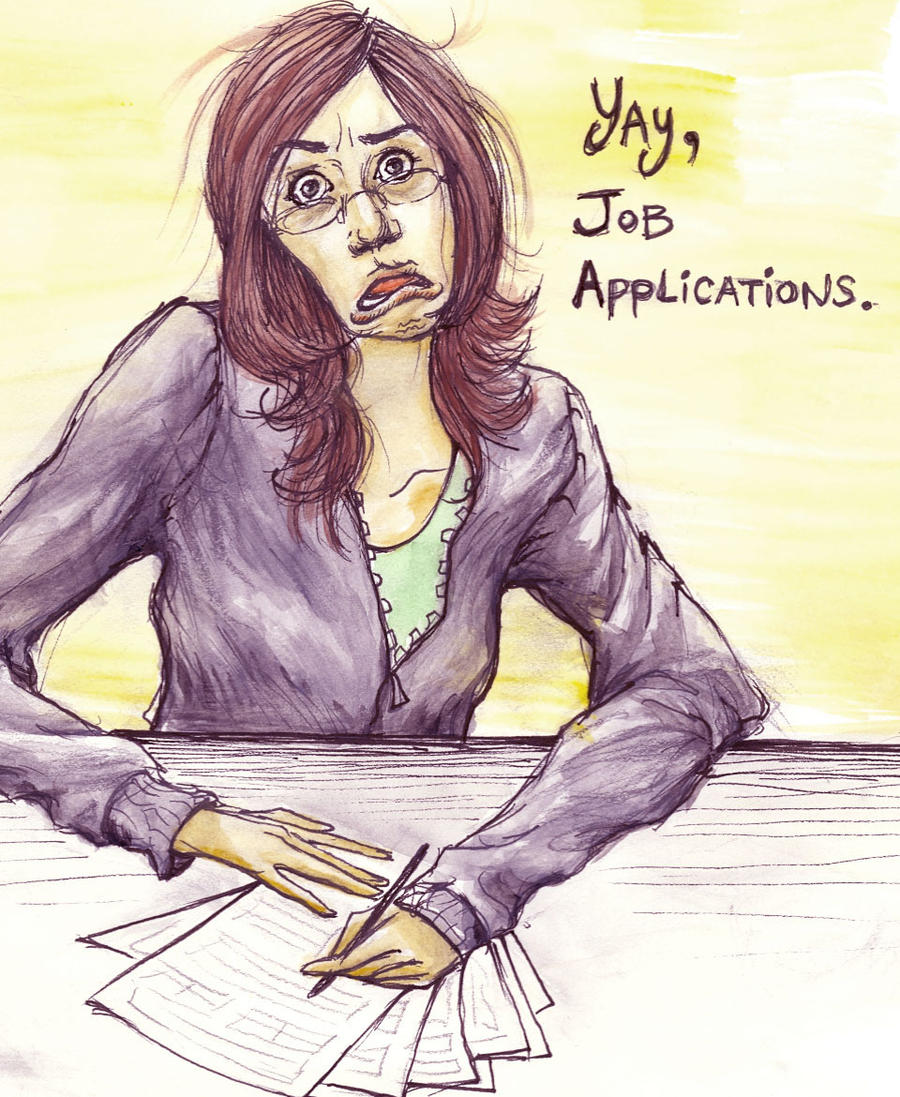
It's been a while since I sat in Mrs Sharpe's Transition class and drew a picture with me and what I think was meant to be a cat saying 'When I grow up I want to be a Vet'. At the time I was obsessed with Animal Hospital on the TV because my mum let me sneak downstairs to watch it without my younger brother or sister. And since then I've definitely wanted to be lots of things. Always a writer. Always a storyteller, though in various incarnations. Novelist, poet, journalist, travel writer, blogger, PR exec, academic. So perhaps some of you will  remember when I was living it up in limbo, musing over job applications, lamenting the Static Sound of Silence when yet another application went unacknowledged and likely lost to the aether of another HR inbox? Well, it looks like I've taken at least a couple steps forward from that and I thought I'd share. Especially since it's meant that I've been answering the question, 'So why do you want to be one of us?', repeatedly in recent weeks.  

The first time I was asked it was back before Easter when I finally broke the Silence of Doom. I had a skype interview. And when that went well I was invited to their Assessment Day. I was in the FINAL TWENTY. And there was a chance that I might end up on Grad Scheme that looked like a Totally Awesome First Step. They asked me: why us, why you, why this job. And I answered with the truth: because I am storyteller but I want a job that lets me be creative within the unique, dynamic and multifaceted world of PR (ok there's some gushing in there but look a tricolon! creative!). Now, I didn't quite make the final hurdle onto that First Step. But the whole experience was a learning curve and of course, I picked up the tattered flag of my unworldly dreams and started the process of applications once again. 

I mean come on, if J.K. Rowling can be rejected a gazillion times (with Harry Potter AND The Cuckoo's Calling) then I could handle the Big Final No as well. 


TOP TIP NUMBER ONE MY FRIENDS: 


Since that so-close-yet-so-far encounter, I've changed tactics a little on the 'please employ me' front. 

In fact, you could say that I've overhauled my game plan

No more speculative emails to 'Dear Sirs' or 'Dear Madams'. No more long, wiffle-waffle cover letters that plead my case. No more mucking around with the design of my CV. I've bid goodbye to my trusty typewriter font, shuffled the format so it looks streamlined, clean-cut. Everything is integrated with my finally updated Linkedin that is also Finally Gaining Views. I wanted to show people exactly who I am and what I want to do.

Thus, even beyond the paperwork and the applications, I've taken to networking with all the razzmatazz I can muster. Since a lot of what I want to do will be about who I know and how I communicate, this step is really something I should have been doing since the beginning. I could make excuses: Edinburgh/Durham is sooooo far away from London. Or: I'm still doing my final dissertation for this masters programme, I couldn't possibly have done this earlier

But these excuses are excuses. And really. Who has time for excuses these days?

As excuses go though, they're pretty feeble when it comes to networking. Because there's this thing call the interwebz! Thanks to a little help from some friends that I've been talking to via email, Facebook and even LinkedIn, I'm now in touch with a number of fantastic people and some brilliant companies. Some have landed me interviews (woop woop) and others have led to amazing conversations full of advice and further recommendations on what to do (equally woop-able). Every single person I have spoken to has helped in some way and I probably certainly owe them a drink (Smiths of Smithfields one night maybe?). 

In fact, right now I'm talking to a company who I think might have The Job of My Dreams and we're Actually Having a Conversation about it. What happened to the Silence of Doom? I don't know. But since I'm having to answer that question again: when I graduate, why do you want to come here and why should we have you... well. I think it's a good thing. 

And mostly this has occurred by remembering some of the golden rules of networking. Here we go, here are some of them. 

1. Remember that the 'contact' you've made is a person. They're probably awesome otherwise they wouldn't be willing to talk to you, give you advice or help you figure out where the stepping stones are in order to cross the big wide river between you, the graduate, and them, the employed. 
2. Think about them before thinking about you. See if there's anything you can also offer them or find out what's important to them for later. It's a two way street, so if you can't do anything more than buy them a nice glass of wine or a triple shot soy chai latte with caramel and extra cream, do that. Otherwise, maybe they'd like to meet someone you know as well. Or perhaps you can make a note and save it for a rainy day.
3. Don't be afraid to ask questions. There are probably stupid questions to ask, but you're new. You're starting out. So unless you're wondering if Paris is the capital of Belgium (keep that for google), ask the question and then hopefully you won't look like a numpty later.
4. Be proactive. People won't come to you. If your friend gives you the name of someone she or he knows then it's up to you to contact that person. Don't leave anything to chance. And just because you're more interested in one sector over another, doesn't mean you should ignore an opportunity to talk to someone in a different field to you. ie. talk to the guy in contracts even if you're more inclined to FLS, you never know where it might lead. Also think about your social media and online presence - use them to your advantage. 
5. When 'getting in touch' with someone new, don't simper and don't waffle. Keep it short, tell them why you're emailing/calling them and, if relevant, remind them who you are and who gave you their details. 
6. Keep in touch and nurture your network. Don't plug someone for advice, contacts or job and then never speak to them again. Not only is it rude, but no one wants to be That Guy. You want to be the BNOC.   
7. Be yourself. Be friendly. And if that fails, maybe read a book by someone like Dale Carnegie. Then start again. Prove that you want to be what you're saying, don't just think things to yourself. So to top that off:  Be hungry.
9. Persevere. Persevere. Persevere. I can say no more. From the first person to say it to me (he'll know who he is), right through to my dog who repeatedly demonstrates her skillz when squeezing herself onto the sofa between my mother and sister, this is by far the best bit of advice I've heard. WE CAN DO IT PEOPLE. WE CAN. 

Anyway, that's quite enough from me. There's a great deal to think about and even more to prove before anyone believes that I can be the person I want to be, and that's likely the same for most of us grads. But that's ok. One step at a time, one question at a time, we can do it.

So to finish up, here is a video of people doing awesome and sometimes kind of a wee bit dangerous things! I bet they love it. 


Je serai poète et toi poésie, 
SCRIBBLER

Sunday, 1 June 2014

Run, Forest, Run


So You Ran a Half Marathon


I'm Half Impressed 

As a wee little child, my not-so-kindly sports teachers knew that I hated cross country. All the signs were there: I would dawdle, drag my feet, pretend anything to escape the horrors of lapping the same two fields a gazzillion times. And anything literally means anything. I think I once pretended that I had Parvovirus - a disease that ONLY DOGS GET and that I'd learnt about on Rolf Harris' Animal Hospital

Yet somehow, a decade or so later, I'm not-so-casually-running rather a lot further than the 1500m that once seemed so daunting. In fact, I finished the Edinburgh Half Marathon last week and you know what - I kind of LOVED it. It was on my list of  challenges that I want/need/should do as soon as possible and in January, I signed up, ready and armed with a cause that spurred me through training, through shin splints and eventually through the 13.1 miles that take you from Edinburgh to Musselburgh. 

The day itself probably couldn't have had a worse start for a first time experience. It was grey as the cobble-stoned Royal Mile and bleaker than bleak. Then it started to rain. Not luke warm May rain though. No, no. It was hard, cold, sheeting RAIN (capitals needed to emphasise the sheer weight of it) that literally had me and my fellow runners shivering and shaking as we struggled to warm up before the race. Plus, this was in the 'Pink' section with my friend Katie, which indicated we were aiming quite high with our original guesstimation of how fast we'd complete the course, and behind us two men in rather dashing lime-and-orange t-shirts discussed how they wanted to beat their personal best of 1:45. At that point, I stopped eavesddropping and felt a rush of pre-start nerves. 

What was I thinking signing up for this?! Why was I running with these Actually Know And Care Racers? Where are the Happy If I Finish Plodders that I could inevitably see myself being? 

As it turned out, the Plodders were some way  behind me in Gold and Black, but I only saw a few of them and it seems that it doesn't much matter where you start. This was fortunate as I found myself running with a group of fellow Breast Cancer Care runners quite early on, lost them around mile five, fell into step with a girl called Emily running for Marine Conservation around at mile seven, hit my 'wall' at mile nine when my feet started to literally throb but was rescued by the lovely Blue-and-Pink Lady whose name I never learned, made it all the way to mile twelve, saw that Blue-and-Pink was struggling someway behind me so slowed down, helped her back into a run and then staggered through the finish line in a sudden burst of sunshine. All a rather respectable time I might add.  


Oh yeah, this is definitely the truth, the whole truth and nothing but the truth.

There were definitely highs and lows to the whole experience. Being asked why I chose Breast Cancer Care made my eyes sting, pushing through the last four miles (where you literally run down a bendy road then run back up the same bendy road), walking fifteen minutes to the car afterwards when all the adrenalin was gone - those were some tough moments.  But that moment when the rain stopped as we ran along the Portobello seafront, or when Eye of the Tiger came onto my headphones, or being spurred back into the race by wonderful but complete strangers, or crossing the finish line, or calling my family to tell them it was finished - those moments were fantastic.  

And after the initial 'NEVER EVER AGAIN' as I stumbled away from the finish line came a euphoric 'OMG WHEN CAN I DO THE NEXT ONE'. So sure, I couldn't walk the next day (and even had to blow off a date Shock/Horror), but I raised a whopping amount of money for a great charity. In fact, this blog wouldn't be complete without a massive shout out:


THANK YOU TO ALL OF YOU WHO DONATED. 
YOU ARE HEROES. 
YOUR SUPPORT PUSHED ME IN THOSE MOMENTS WHERE IT HURT AND MADE THE BEST BITS EVEN SWEETER.
THANK YOU THANK YOU 
THANK YOU. 


Anyway, so this is my little post about running and half-marathons and all the ups and downs of my experience in Edinburgh flat and rapid race. Still on my list are things like 'run a full marathon' and 'survive a Tough Mudder'. And even though I think I'll leave the Iron Man to people like my brother who drink protein/pay homage to their abs and I can probably live without swimming the Channel... Never Say Never!  

Je serai poète et toi poésie,
SCRIBBLER


Monday, 20 January 2014

Musings over a Graduate Application


LIVING IT UP IN LIMBO


Warning
If you suffer from Graduatewithnojobitis you should know that this post does have the ability to improve your mood. But if you stop in the middle you could end up suffering from the following conditions: moodiness, sense of impending doom, anxiety, nausea, anger, grief, inexplicable terror, nightmares, insomnia and uncontrollable weeping. 
If you do experience any of these symptoms scroll straight to 
the bottom of the page for a video of funny cats. 

*

Yet another application is in, another deadline met. Tomorrow I will finish the next one. And at some point I will write something poignant for my Master's degree, pen an article for the university newspaper and then embroil myself in the editing needed for a client's novel. I've quickly realised that whilst being a postgraduate is fantastic, in eight months time I'll be out on my own, dipping my toe into Real Life. 

This is slightly terrifying. 

Especially when Real Life doesn't seem to want to give me, or a load of my equally qualified friends, a job. Not because finding a job is hard - it's ridiculously easy to find a job using Milkround or Guardian Jobs or the newspaper or just a cursory internet search using key terms like 'Graduate Publishing' or 'PR Entry Level' or 'Marketing 2014'. Earning that job, that much desired position, that omg-it-actually-pays-a-salary role: that is the tricky part. 


So far I've only met with the Apologetic Email of Doom and the Utter Silence of Rejection


And yeah rejection kind of hurts. Maybe only a little the first time. Better luck next time right? The third, fifth and tenth time it niggles a little, stings a tad. Then by the twelfth or the thirtieth, it's hard to keep yourself from wondering "what’s wrong with me?!". It's incomprehensible. Because you’re great. Really you are. You deserved that administrative assistant role with a retail company you’ve never heard of because you’re actually a wonderful human being and there’s no explanation as to why you’re not having any luck attaining that precious J. O. B. Thus, by the time you’re on the umpteenth rejection email, you’re probably reassessing priorities. Maybe thinking... well... Costa will tide me over until someone hires me. Only COSTA rejects you as well. Because when 1,700 people apply for 8 jobs at a Costa, suddenly it’s not so simple.

In fact, it’s kind of grim. There’s thousands of us desperately scrabbling away at the job market, studying our carefully reworded cover letters and our personalised CVs, wondering what we’re not doing that Jennifer with the purple handbag from that philosophy class in first year did better than us.

So what do we do? How do we change this? Is it even in our power to change things or are we stuck in the rut of our economic climate? Should we be blaming the reputations of young people as bad timekeepers and over-dreamers, expecting to waltz into their ideal job at 22? Should we be eyeing up our international counterparts and believing they’re stealing our jobs? Or should we be readying our boots to kick out the 'old people' who are living longer, working longer and therefore holding onto jobs for longer? A fair few are happy to simply point out ‘At Least It’s Not 2009’. Yes, therein lies our silver-lining, fellow graduates, it’s not the beginning of the worst fiscal crash in decades. 

I can see your frowns: surely there HAS to be something better than that? ....

A New Yorker Cartoon by Mike Twohy


YES THERE IS GOOD NEWS.

Firstly, the economy has improved and with any luck it'll keep improving. Plus, all those traditional jobs that were cut down during the fiscal crash - they're not the only options anymore. There are loads of start ups, groups of young people with big dreams who are keen to see the world working slightly differently. Things aren't as bad as some of the stories suggest. And whether it takes six days, six weeks or six months - statistics say that IT WILL HAPPEN. Don't give up. 

Which leads me to Point the Second: our age is digital. We can do LOADS using our shiny computers and fizzbubbling interwebz. Not only can you make your CV look awesome and google great cover letters. You also can literally stalk companies using online media too, because if Little Miss Brilliant or Mr Great-Is-My-Middle-Name from That Awesome Company leaves to start in Another Pretty Fantastic Role then there's a new vacancy. People might move up and create a vacuum for little intrepid graduates to slope their way into. And then there's things like Linkedin. Sure we've all heard it before - USE YOUR CONTACTS, SAYS EVERYBODY ALL THE TIME - but now you can really track what everyone you went to university with is doing. So if your friend has a job at a place you think sounds interesting, you can ask them about it. You can find out what they did and what they think of it now. Even if they can't give you a knee in, they might be able to give you some tips. 

Thirdly: you are not alone. We're all in the same boat. We're young, soon-to-be-unemployed-non-students and whilst the boat might look like it's chockablock and about to sink, it's completely natural to be in this position. Some will be thinking OOOOOOO SO MUCH LOOKS AMAZING I JUST CAN'T CHOOSE. And others will be frowning at the Jobs List just praying that one day something comes up that they Actually Find Interesting. The point is that after some self-analysis and brutal honesty, we will figure out what to apply for, who to apply to and whether we actually want it or if we're driven by desperation. We will make it. Eventually. One person at a time until our younger siblings have caught up with us. And then we'll go try Australia. 


So basically, there are things to look forward to and whilst we're all panicky because we're freaking out (secretly, on the inside, all the time) we do have the option to take a little bit of time and figure ourselves out as well as our jobs. We don't have to be fully-fledged-fifty-somethings until we are fifty-somethings. And even then I doubt we'll worry too much about actually being fifty-somethings. We have the time to misspend a little bit of this limbo period working things out. It will suck at times. It will hurt at times. It will probably be the most depressing thing you've ever experienced ever sometimes. But the silver-lining is that there's always the chance that next time you'll receive the email that says YES. WE WANT YOU. YOU'RE HIRED. Because we'll plod on together, hoping and dreaming and wishing that that email already arrived, and we'll make sure the boat doesn't sink by watching videos of funny cats. Like this one. They bring out videos every month. BOOM. 


MAY THE ODDS BE EVER IN YOUR FAVOUR. AND MINE.

Je serai poète et toi poésie,
SCRIBBLER

Friday, 11 October 2013

Durham University - FAQs for the Curious


Welcome to Durham. 
My third university in five years. 

I've begun to realise these past few weeks that somehow I've a tendency to live in beautiful places surrounded by history and brilliant people. 

I grew up outside of London, surrounded by fields and with a view of the night sky, then I went to school in a rather idyllic spot on Hertford Heath before I fled north for university. There, I settled into the Jekyll and Hyde wonder that is Edinburgh and after two years, I took a break to travel West. All the way to the sunny blue skies of North Carolina for a study abroad year that inspired the creation of this blog. Of course, after returning to my beloved Scottish home-away-from-home for my final year, I graduated, worked all summer and ended up moving for my postgraduate year to here. Durham. Another beautiful city swathed in history both ancient and less ancient. 

But before I tell you about any of my adventures thus far, here are some rumour-based Frequently Asked Questions that required an answer: 

DURHAM IS A SCHOOL FOR ANTS Everyone has a habit of thinking of Durham as a tiny wee town in the middle of no where, but compared to Chapel Hill, Durham is a thriving metropolis. Plus it's right next to Newcastle so when a dose of city life is needed, it's not too hard to hop a train to somewhere a little bigger. Also, when I think about how many places students used in Edinburgh, it probably averages out - only it's all in one place here... rather than a slog down Lothian Rd. 

DURHAM STUDENTS ARE OXBRIDGE REJECTS Ok so this may have a kernel of truth in it somewhere, lots of people both undergrads and postgrads seem to have at least considered either Scylla or Charybdis whilst they were applying. And 'Never Have I Ever Applied to Oxford' is a regular laugh. But then a huge number of my Edinburgh friends were also post-Oxbridge applicants. And several people I know who attended Manchester or Exeter or went overseas. Durham's not really so different from any top university in this regard.

EVERYONE MARRIES EVERYONE ELSE Admittedly, I happen to know one of the cutest examples of Durham Marriage statistics (they're currently retired and coming up to their 30th Anniversary) but I'm not sure if it's completely true what they say about marrying your Duzza boyfriend or girlfriend. As of now, I've heard that 1/10 students marry their S/O from Durham, that 1/4 marry their S/O from Durham, that 1/5, 1/25, 1/100 marry their S/O from Durham... I think we need a statistic that everyone can agree on.

Rah Rah Rah Blahblahblueblah
COLLEGES ARE LIKE GENTLEMAN CLUBS One of the questions I'm most frequently asked is whether or not the collegiate system is elitist, exclusionary, prejudiced towards certain characters etc but so far all I've really noticed as a postgrad is that I love the people I live with because we're all work hard, play hard types and that being part of a college is a little like being part of a student society with the nights out, formals, intramural sports teams (or in this case intracollegiate) etc. Perhaps this is different for undergrads.


DURHAM STUDENTS ARE ALL BLUE-BLOODED I've yet to meet a lord. Actually, I've yet to meet an heir/ess of any kind. That's not to say they're not here (I know my sister has a couple friends with lives straight out of Made In Chelsea) but they don't inundate the market square. Especially not on a Friday.  

BUT THEY ARE ALL SOUTHERN RIGHT? There are a lot Southerners here at Durham - myself included - and even those people who aren't RP-English speaking folk from the Home Counties somehow speak like they are. It took me all of three weeks to realise that one guy in halls is actually Welsh because he speaks like Prince William and no matter how many times I'm told that another boy is from Cornwall, I just can't hear it. As it turns out, despite the neutralising effect Durham Cathedral's shadow has upon dialectal differences, there are people from all over the country and all over the world. 

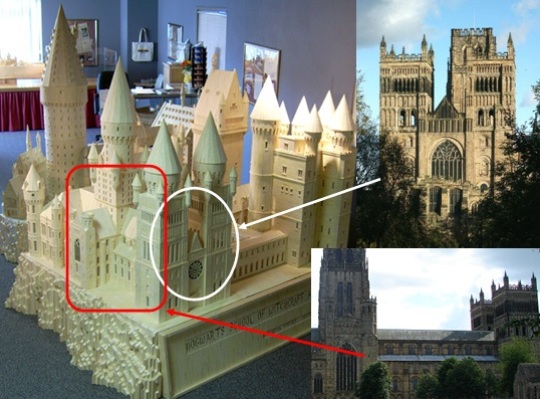
DURHAM IS HOGWARTS. Yes and No. The cathedral was used for various different parts of the Harry Potter films. Dumbledore fell to his death from the top of the bell tower. McGonagall's classroom is just off the cloisters. The cloisters are the setting for the famous Harry/Hedwig scene (and potentially that bit with the Grey Lady - a ghost also claimed by Durham). The Cathedral Library actually could be part of Hogwarts. And when you're walking home along Framwellgate Bridge, it's hard not to believe you're in Hogsmeade. But technically, Hogwarts actually belongs to George Percy.


So there are some of the rumours and some of the truths. I will tell you adventures next time.

Je serai poète et toi poésie, 
SCRIBBLER

Monday, 30 September 2013

Look out London, the ‘Mericans are a-coming


I first wrote this for Allison & Busby's blog page - see link above - but I wanted to post it here as well because it so nicely ties into some of the books I've been reading lately.

Often considered a rather staid and sensible prize compared to others of its ilk, the Man Booker Prize has a reputation as a defender of British and Commonwealth writing. Different to its fellow literary prizes, the criteria was simply that the novel be written in the English language by a member of the Commonwealth of Nations. Yet overshadowing this year’s shortlist is the latest news: that from 2014 America will be competing against Commonwealth entrants.

The award has brought worldwide acclaim to bookshelf names such as Margaret Atwood (The Blind Assassin 2000), Kazuo Ishiguro (The Remains of the Day 1989), two-time winner Hilary Mantel (Wolf Hall 2009 and Bring up the Bodies 2012) and even the divisive Salman Rushdie, who was relatively unknown before his novel Midnight’s Children won the award in 1981.

Thinking about it, therefore, it seems hardly a surprise that this years Man Booker Prize has both controversy and scepticism stalking alongside it.  

Although quibbles have arisen, such as the brevity of Colm Toibin’s one hundred and one paged novel, The Testament of Mary, which seems to rankle Will Gompertz. The focus lies on how many authors, from Melvyn Bragg to A.S. Byatt, feel that changing the rules of the Man Booker Prize, to make it a ‘truly international award’ as planned, directly undermines the writers it has historically supported.

Some, like A.S. Byatt fear that too many entrants will overwhelm judges and mean that hundreds of manuscripts and entrants will be passed over without due consideration; others believe that it’s a risk worth taking, a commercially rooted decision that will benefit the prestige and reception of the award and help them to compete against other international prizes. However, the most pressing concern remains that the American market cannot helpbut to dominate the long and short list simply because of the quantity of their entrants. This fear is only exacerbated by the shortlisted Lowlands by Jhumpa Lahiri, accused of being an American novel rather than Bengali, and for some, epitomising the way US literature will impugn the one-time bulwark of British and Commonwealth writers.

 So is this the end of the Man Booker, as Guardian blogger, Philip Hensher, puts it? Or is this a fresh start for the Prize who received incredible backlash when Mantel’s sequel to Wolf Hall won last year? Should we be wary of who might be nominated next year? Or should we be excited at the possibility of a wider intake? These are questions to keep in mind as the announcement for the 2013 winner approaches and also queries to think over when you next pluck a Man Booker long or shortlist from the shelf.

Je serai poète et toi poésie,
SCRIBBLER
Sunday, 15 September 2013

Cult Fiction - Amity & Sorrow


"She didn’t know that preparing for the end of the world would make it that 
much more likely to come. " 

Amity & Sorrow is the most recent book to keep me up all night. 

Despite my cynical predisposition - did I really want to read a novel about 'God, sex and farming?' - something stopped me from putting it down. Every time I tried, I found myself twisting to pluck it from the shelf again and resume its journey. Because it is a journey. This debut novel from US playwright Peggy Riley, journeys across rural, middle America and dusts you off on a small rapeseed farm in Oklahoma. It quests through a young girl's coming of age and a sister's development as an individual. It plots the love of a mother for her children and her husband and herself. It is an odyssey of human emotion. A voyage through a family's life. 

It rapidly becomes more complicated then a single, wayfaring wife and her naive offspring.The novel explores a harrowing journey through emotional, spiritual and physical abuse and although Riley conveys this trauma, she never clarifies its exact nature, letting her audience interpret for themselves. Her unique style, which is probably the reason for her novel's nomination for the Guardian First Book Award as well as its peculiarities, manipulates this ambiguity. By using the often out-of-vogue present tense, Riley begins 'in the middle of things', in the heart of her characters' plight. Slowly their stories unravel, creating a constant, compelling tug that becomes a desperate rush towards the conclusion. 

 Riley weaves the plot together through moments of reflection set against the immediate present. With each flashback, another stitch in the fabric of this family's story reveals itself and elicits a little more sympathy for characters that initially seem foolish, spoilt and strange. The shadowy cloisters of their past wrestle with the beating sun of a modern, alien world, but slowly the reasons for why Amaranth has fled with her daughters, and why their car crash means they must rely on the generosity of a farmer, spins into darker, creepier territory. Looming over them is the threat of their father and his Messianic cult. 

Fear and love compel Riley's story. As one daughter waits 'for the end of the world' and the other ricochets between love for her mother and adoration of her sister, their mother struggles to release them from their shared history. For these characters, 'the world is coming apart at the seams' but they are bound together, bound by a 'thread sewing [them] down to [their father] and all' his fifty wives. The potential to escape only exists if they are willing to travel through fire, to burn, but who will brave the fire and who will survive it is left to the final, desperate conclusion. 

Whilst at times Riley's narrative style loses clarity, somehow it always regains its footing, upping the momentum as it does so. It is one of my favourite books of this year and I highly recommend it. 

Je serai poète et toi poésie,
SCRIBBLER